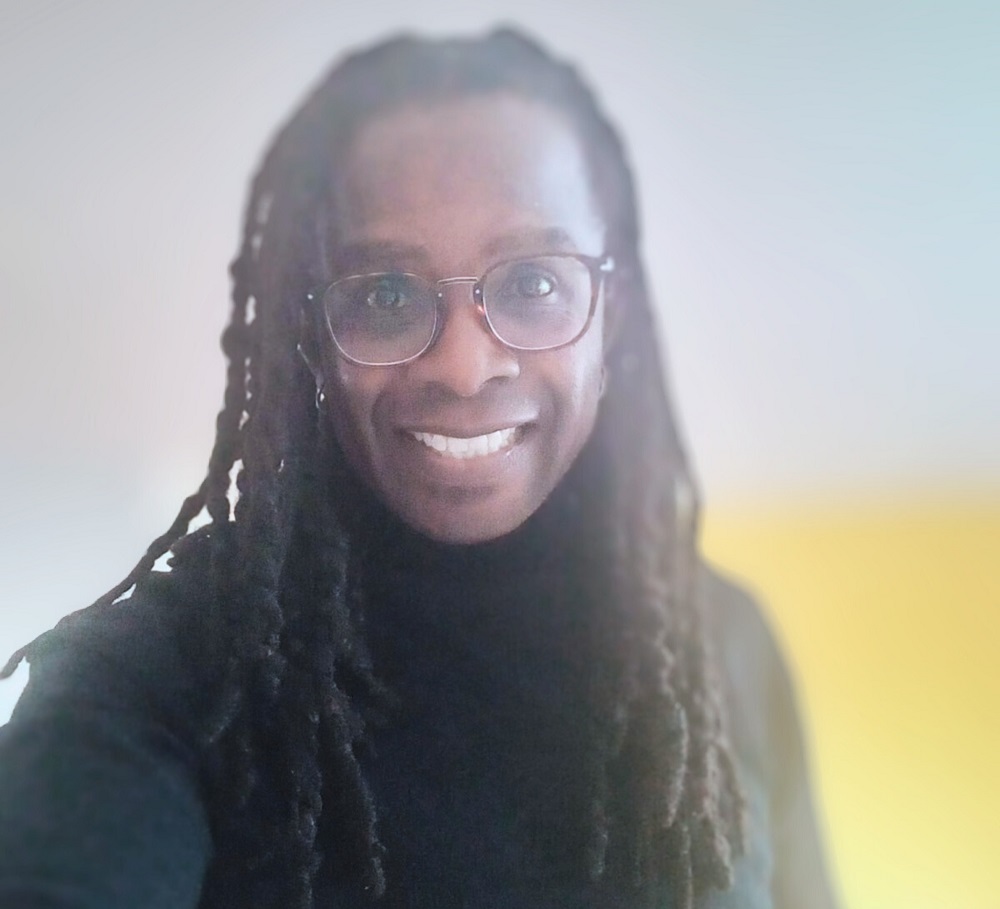
Could you share with us some information about your family life? I am happily married and I have 2 younger daughters one is 9 and the other is 5. From a former relationship, I have 2 sons, they are grown-up, doing their own thing.
I began my life on the island of Aruba and I moved a lot. I always say that I belong in the Kingdom of the Netherlands. I don’t make any distinctions between say Aruba, Curaçao, Sint Maarten or the Netherlands. I was formed by flows and ideas from across the Kingdom and beyond.
My parents and family shaped me fully and I am deeply grateful, especially also my mother’s mother had a lasting influence in my life. She taught me this motto: “No one is better than you and you are not better than anyone else”. She also explained, “we come into this world with gifts and certain talents, and when you get a gift, you have to cherish and develop it”. I was socialized with these two ethical outlooks. So I cherish the development of myself and others. Call it radical equality. So self-flourishing of myself and every other is consequential to me. I am an advocate of a society where everyone can develop their gifts and talents. I am an advocate for a global commonwealth of decent societies, meaning societies where institutions do not humiliate any of its residents or visitors. I very much believe in creole cosmopolitanism. That is why I say someone begins somewhere, they are not born somewhere. A spirit is not born, it begins its journey somewhere on this earth. How a spirit came into existence, from where, how, or what, no one knows. You cannot collapse a spirit with a national or ethnic marker. You cannot equate a spirit with flesh, pigment, or DNA. Moreover a spirit is a singularity, a continuous assemblage called a self whose boundary with the rest of existence is porous. Caribbean, Dominican, Dutch, French, and British West Indian are the primary cultures the spirit that I am first got clothed in when I began my earthly journey. They are not the last!
Could you share something about your educational background and your experience? I have a degree in Social & Cultural Development, which allowed me to work as a community development officer in Rotterdam. I also worked as a therapist with patients with Alzheimer’s in Hilvarenbeek. I also have a degree in Development Sociology. In that capacity I worked for environmental organizations also participating in the COP6 UN conference many, many, many years ago. Now, last but not least, I have a PhD in Anthropology. That is part of my academic life, researching and writing articles and books.
I also tried my hand at writing music, composing, performing and dancing. I for instance co-wrote the score of the Kids Of Ti Dè to accompany the Veronica Goes Surinam series which involved featured popular figures back then such as Bart de Graaf of BNN and Ray Slijngaard of 2 Unlimited.
Now let me tell you about my work as an academic, I have spent most of my life working in universities and research institutes, so this will be long. Pardon me for that.
My first fieldwork experience was in India among what are called Scheduled Castes and Tribes, that have reservation status. Then I worked with people in Brazil, I also did fieldwork in the Netherlands, and in the Caribbean. So I have worked in Asia, Latin America, Europe, and the Caribbean. I studied at the Radboud University of Nijmegen which specializes in the Anthropology of Asia and the Pacific, so I ended up in India as my first destination to learn the art of doing anthropological fieldwork and I liked it. I was seen by the Indians I met as someone from the West Indies. And especially because of cricket, which is the number 1 sport in India, and it is a sport in which British West Indians excel, people from the West Indies are respected. It gave me an entrance to have good conversations as I gained acceptance. Many Indians were also enamored with of the work of some renowned Caribbean scholars, like C.L.R. James who wrote the book:” Beyond a Boundary”. In this book, the importance of sports to people emancipating from colonialism and imperialism was superbly argued.
The ideologies that legitimated imperialism and colonialism claimed that Western Europeans were cognitively and physically superior to the peoples they colonized. Everything good and fair supposedly came from Western Europe. People that were colonized were taught that Europe was their future.
C.L.R. James argued in “Beyond a Boundary” that the colonized took the games of the Europeans and mastered these. They learned to play these sports and became very good at it – they even transformed the way the game was played stylistically and effectively. That had consequences in dismantling the ideological legitimations of imperialism and colonialism. The colonized said “I am mastering your game, I can think as good as you can, I can even hit the ball better than you”. The game of cricket, just like baseball, and soccer, showed the lie of the myth of the cognitive and physical superiority of the colonizers. C.L.R James argued in that book that there was an elective affinity between the emancipation of the colonized and the sports and culture they adapted from the colonizers and merged with their own ways. In India, James’s book was read by many, and they also knew about VS Naipaul and thus the Indian presence in the Caribbean. They associated me with the West Indies. I had a wonderful experience in India where I must say caste discrimination was rampant. Many were also struggling against anti-Islamic sentiments.
I deeply respected the way the discriminated fought in subtle and not so subtle ways against their subordination. It helped me cherish the Caribbean, and recognize connections between peoples colonized.
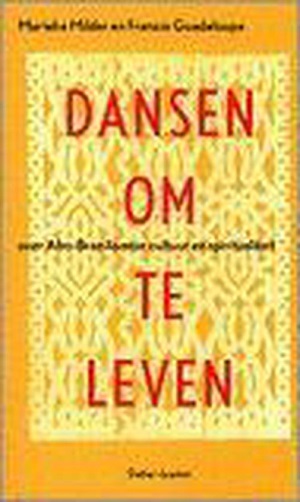
When I traveled to Brazil, I went to study Umbanda and Candomble. I stayed primarily in favelas where the poor and struggling Brazilians live. I followed two families – especially the mother’s in these families. One of these women descended from 19th century German immigrants to Brazil. In those days European countries were exporting their poor people to Latin America, North America, and Australia. The myth is that all these people got rich and did good. That is a lie as many did not. The person I followed, whom I called Sisi, was living in abject poverty. Sisi told me: “whenever I wear my bright color uniform cleaning other people’s rubbish, I am as bright as can be, but no one sees me, I don’t exist. If I borrow expensive clothes and copy the walking of a wealthy woman everybody sees me.” This illustrated to me the relations in class and racial categorization that exists in Brazil. Sisi was living next to a family of mixed African, Amazonian Indian descent. Rozenette, the mother in that family, was Sisi’s best friend. From Rozenette I learned of the bestiality of wealthy elite Brazilian families whose cordiality to middle class strangers like myself, did not extend to their domestic workers. What I learned from both of these women is how the spiritual philosophies of Umbanda and Candomble gave them a sense of worth, in circumstances where the husbands were abusive, and society trampled them. I learned that these spiritual philosophies of life are important in the lives of people in Brazil. In doing that research I also met a lot of inspiring figures and organizations linked to these spiritual philosophies like the brassbands Ilê Aiyê and Olodum. They had social work organizations, dance and music studios, capoeira classes, and study groups to empower the struggling folk in Brazil. I was able to pubish two books based on my research in Brazil: “A vida e uma dança – The Candomble Through the Lives of Two Cariocas” and (co-authored with Marieke Milder) “Dansen om te Leven: over Afro-Braziliaanse cultuur en spiritualiteit”.
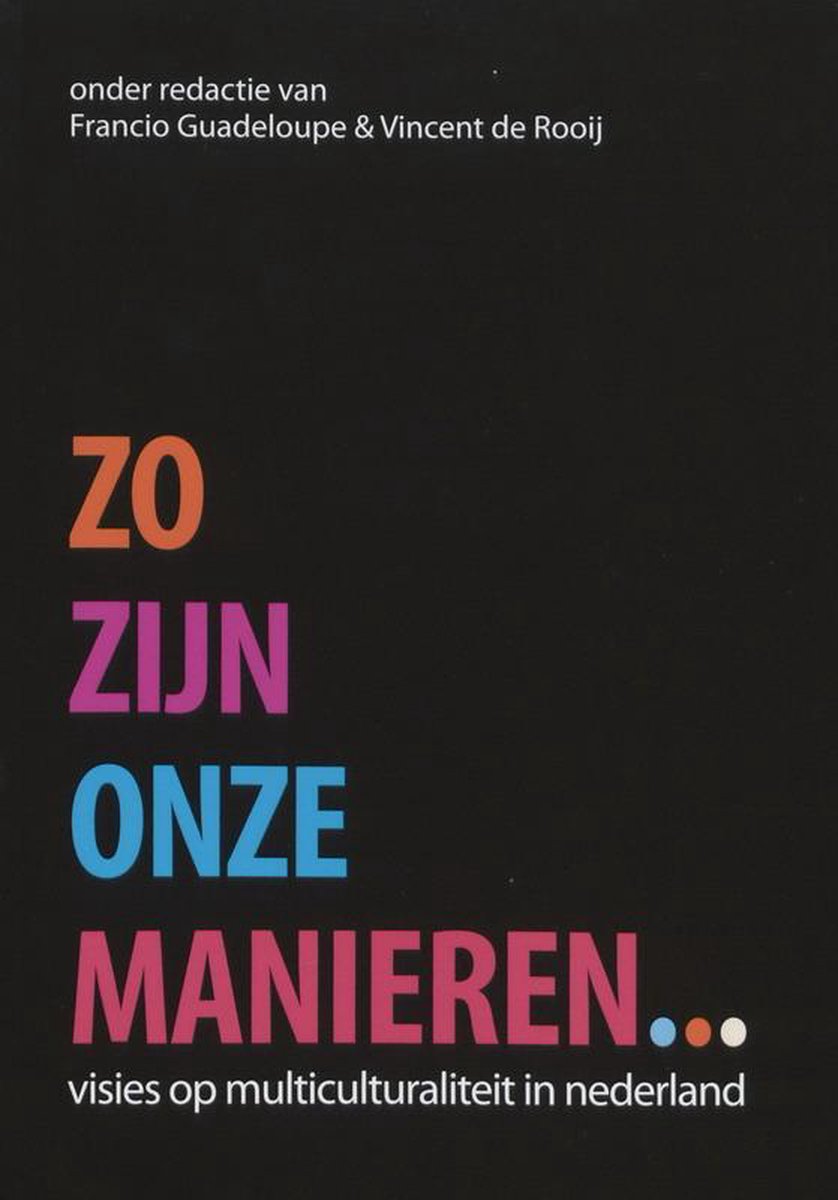
In the Netherlands I did fieldwork among youngsters and young adults of Moroccan, Surinamese, Antillean, Turkish, and ‘native Dutch’ descent. I was interested in their modes of finding their way and co-creating a newly multiculturalizing Dutch society. Doing that research led to the publication of the edited volume “Zo zijn onze manieren….visies of multiculturaliteit in Nederland” that was launched at International press centre Nieuwspoort.
The book which I co-edited with my colleague Dr. Vincent de Rooij addressed the public discussion on multiculturalism in the Netherlands. Every parliamentarian at the time received a copy of the book. Public sessions based on the book were held involving movers and shakers such as ex- Dutch Prime Minister Prof. dr. Ruud Lubbers.
We also organized workshops in various working class neighborhoods where academics would entering into discussions with residents. That book did well and was taught in universities. The argument was simple: you could critique multiculturalism, but you had to recognize that multiculturality was the actual condition of every human society. There has never existed a society with only one culture. The Netherlands prior to the arrival of peoples from the Caribbean, North Africa, Turkey, and Eastern Europe, was also multicultural. It was about finding the right balance, not fooling yourself that you could return to a uniform culture which never existed. I have continued to publish on the Netherlands. But more on that later. Let me tell you about my work on the Caribbean.
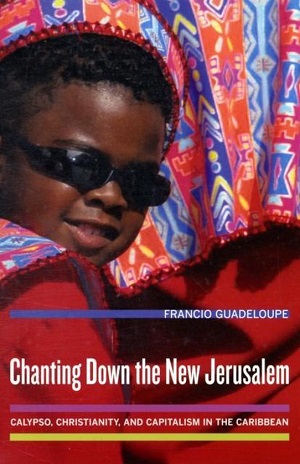
There was a dominant idea in the mid- to late 1990s, after the end of the Cold War, that predicted that we were heading for a clash of civilizations: the axis of struggle would shift from capitalism vs communism to ethno-racial and ethno-religious strife. One translation of this was the reasoning that wherever you had lots of ethnic and religious diversity, you would have struggle and strife and violence. I disagreed with that. I decided to do a Ph.D. thesis on the binational Caribbean island of Sint Maarten & Saint Martin. Here were countries with a whole lot of ethnic and religious diversity. 80 % of the population are newcomers. People from across the globe met on Sint Maarten and Saint Martin. You had first generation St. Martiners with parents from India and Pakistan meeting Guyanese and Surinamese whose ancestors had embarked as indentured labourers. First-generation Cantonese speaking Chinese met Trinidadians who spoke Hakka, and Nigerians faced Barbadians whose ancestors had survived the Middle Passage. Then you had those from Latin America, the USA, Australia, and ex-ANC activists from South Africa, and many many more. This was the world, where people practiced a multitude of Christianities, Hinduism, Islam, Buddhism, Jain, Bahai, Voodoo, and what have you. Diversity like you cannot imagine, yet here people were not fighting. There was no extreme struggle and strife.
It led me to argue in the book “Chanting Down the New Jerusalem – Calypso, Christianity, and Capitalism in the Caribbean” that it was the dominant story told that mattered most – not the amount of diversity. So I argued in that book, that it was the media. How the media especially the dominant media described the reality on the ground would cause ethnic-religious fighting or peaceful living. The radio disc jockeys on Sint Maarten & Saint Martin taught people on the island to consider diversity banal, normal, matter of fact. Radio on that island was the dominant media.
The book presented a simple argument that has universal application. In the Netherlands too many TV programs, newspapers, and radio talk shows, constantly translate social-economic concerns into the register of ethnic and religious difference. By repeating this, and following certain populists in politics, ethnic and religious difference become a problem.
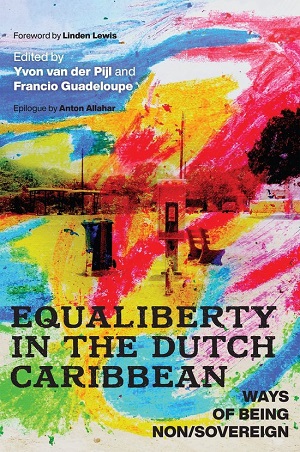
My contention is that Caribbean dynamics are global dynamics. People across the globe can learn from how island people at their best go about tackling pressing matters of concern. My 2022 book on the Caribbean, a volume co-edited with Yvon van der Pijl is entitled : “Equaliberty in the Dutch Caribbean: Ways of Being Non/Sovereign”. Again the argument is simple: instead of talking UN talk about every place having to be an independent nation-state, let us look at how ordinary people in the Dutch Caribbean envision autonomy. When you listen to the silent majority, the women and men who are hardy interviewed on radio and TV, or who don’t brag and boast on social media, you witness a remarkable commonsense. For them autonomy equals equaliberty, namely the balancing of equality and liberty whereby everyone counts as one and no more than one. They do not want to live a society where some count as five and others as one or even less than one. Equaliberty as autonomy is for them is about having decent jobs and wages, having opportunities to grow, good healthcare, clean environments. They want these concrete things in a way in which they as ordinary folk can also decide how and what. They want to co-govern. It is in the end what C.L.R. James wrote about long ago namely, that we need to recognize in the Caribbean that ‘every cook can govern’. “Equaliberty” has chapters about all six Dutch Caribbean islands. I have tackled the question of the nation and the national question in a book that appeared last year (2023) entitled Caribbean Cultural Heritage and the Nation. I co-edited that book with Alex van Stipriaan and Luc Alofs. Its focus is on Aruba, Bonaire and Curaçao studied from a regional focus.
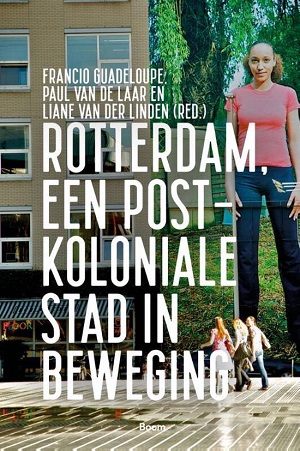
Now that Caribbean idea that every cook can govern inspired Rotterdam: een postkoloniale stad in beweging. It is an experimental book in which we sought to have many different voices speak to and analyze the changing reality of the city of Rotterdam. You find contributions in that book from bonafide social scientists next to those of a chef Kok, a university student, rappers, and public intellectuals. We do not hierarchize their contributions but show how they critically complement each other in demonstrating the kaleidoscope that is any Dutch metropolitan city today. It is example of what anthropologists call ‘writing culture together’.
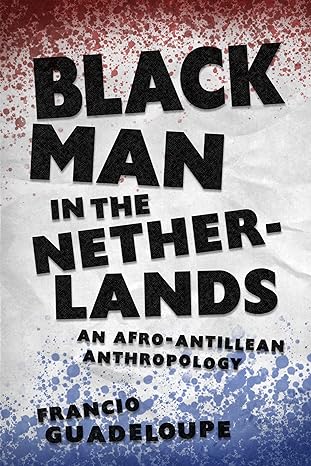
Now the last book I should speak about, a publication from 2022, is Black Man in the Netherlands: an Afro-Antillean Anthropology. I often I meet fellow academics of the activist stripe who ask me: “How does it feel to be a black man in the Netherlands?” They expect me to share stories of struggle and strive. Afropessimism. That is what they want to hear. I thought to myself that I would answer this question in the form of a book. Given the many diversities in the Netherlands, people grow up together. In the USA the communities are extremely segregated. Here in the Netherlands people live together and their children grow up together. The latter developed a version of Dutch which includes words from the language of their parents, from popular culture, and game culture. This language called straattaal, became their common language. They also created their own music styles and wear, called urban, and their unique ways of playing soccer. All of this was co-created, a polyethnic affair. Underneath the umbrella of the dominant Dutch culture of the Netherlands, a new culture started to emerge. That is the Netherlands I grew up in. My work has been to accentuate this culture and the conviviality it enables. That doesn’t mean there is no discrimination in the Netherlands. It is alive and well. But this miracle has also taken place. I choose to feed the miracle. In that I am in conversation with people such the public philosopher Khadija Al-Mourabit, the anthropologists Guno Jones and Wayne Modest, and Yvon van der Pijl who I mentioned before.
You are involved in research where you study the consequences of climate change, if I am correct in the Dutch Caribbean Islands, we were wondering why this is so important. Since when was it formed? Does it involve the private and public sectors? Correct, I am the Chair of the NWO funded research program “The islanders at the Helm”. With 11 researchers we are studying how people and institutions in the Dutch Caribbean respond to the climate challenges in the region and the world. We study all the different responses, from acceptance to denial, without judgment. We are trying to understand their reasoning so that possible interventions will take their realities into consideration. Some of the methods involved is co-creating interventions with stakeholders (Prof. dr. Ellen van Bueren of the Technical University Delft has worked with the CAS Foundation to have Climate Impact Atlas to guide policy on the BES islands), we organize workshops and lectures where researchers critically share their findings and conclusions with the public and exhibitions such as the one of Sharelly Emanuelson, the magnificent Curaçaon-Aruban visual anthropologist of Island(er)s, in the Rijksmuseum. Just recently I was in Curaçao with three researchers—Gregory Richardson of the IPA, Harold Kelly of the NAMA, and Sharelly Emanuelson of the KITLV/UvA—engaging with the public and the minister Cijntje of the Ministry of Economic Affairs. We also spoke to Minister Van Heydorn from the Ministry of Education and Culture. We discussed how to implement climate in the curriculum in the schools. We have partners in Curaçao like Gilbert Cijntje from ICUC, Pedzi Girigori was part of the conversation with us from the Meteorological Department, and Elton Villareal from NAAM. We also have steady partners in wider Caribbean, such as on Bonaire (Terramar Museum) Aruba (NAMA), Sint Maarten (USM), St. Thomas (USVI), and Trinidad (UWI).
Now if you ask me about what motivates me to do this research, it has to do with a personal experience. In 2017 when hurricane Irma devasted Sint Maarten and Saint Martin, I was President/Rector Magnificus of the University of St. Martin. It
was the strongest hurricane that was ever recorded – a typhoon category 5 Plus. In a few hours, 95 % of the island was destroyed. This was an important motivation to study changes in the climate. It was a return to my earlier work with environmental organizations.
What is your BIG WHY or driving motivation to be who you are right now? And why is it that you want to find ways and means to contribute? Existentially speaking, we don’t know why we are here, but we are here now. And since we are here we each need to answer the question: “How do I take care of others around me, others I depend on, which is the only way to take care of self; to repay the debt of being alive and continuing to become”.
On the question ‘Who am I and what is the meaning of life’ to me you answer that by “being there for someone else as someone else was there for you when you were a helpless infant. That becomes the reason for living. Absolute dependence in relative autonomy”.
What are your plans for the coming years for the coming 5 years from now? First I am going to keep doing for now what I am doing and finish “Island(er)s at the Helm”. I am also involved in the NWA funded research program Re/Presenting Europe in a role of a Co-chair engaging with the question on “How to create a European Identity that is not an anti-world identity?” The old dominant Europe an identity, still very much alive today is anti-world, meaning anti-life. So how do we co-create, kindle, and strengthen that other European spirit that has always been there as a minor note that was and still is a pro-life spirit, a pro-world spirit based on the principles we associate with the French Revolution and the spirit that fought against Nazism and recognizes that Colonialism was wrong.
What are the challenges that you are dealing with? And how are you dealing with these different challenges you confront? How do you remind people that they should be forward-looking? We can’t seem to focus on the future anymore. We forget that our aim as progressive folk is “to introduce invention into existence” as Franz Fanon and C.L.R. James never tired reminding us. If everyone is looking back we can’t seem to focus on the future as an open horizon where impossibilities can become possibilities. Now there is nothing wrong with looking at past hurts and studying these, but if that is the only thing you are doing in an obsessive way, you can’t dream of anymore. Dreams are about what is to come. How to remain open to what is to come?
How do you remind people that most ancestors of most people across the world, not only those of African descent in the so-called New World, were servants and footstools of other people? Many people are still servants and footstools to other people.
What kept them alive, what stopped them from succumbing to the lure of committing suicide, was that they had hope and believed that tomorrow would be better than today. And they acted on that hope. Through all kinds of processes and developments and in different parts of the world a dominant idea emerged in the 18th and 19th century, with precursors in the 17th century, that we could have it much better, even have it good here on Earth. That was a new dominant idea – that life ought to be good in the here and now. That something was wrong with inequality in the here and now. You see most people before that hoped that there could be a better world in another world, a world after this world, Nirvana, Heaven or what have you. Or they believed in a narrow universality that privileged their group as in “Christians should not enslave other Christians, but pagans can be thingified”. But in the 18th and 19th century given the revolts on the plantations in the Caribbean and Latin America, given the way the Amer-Indians fought against the “encomienda” systems In South America, given the way in the USA pilgrims fought against British Imperialism and the captured Africans and Amer-Indians fought against the unfreedoms they faced at the hands of some of these same pilgrims, given the way the poor Irish were fighting against the British that colonized their lands, given the way the French people of the third estate were fighting against the king and nobility, given the way the slavs and serfs were fighting in Poland and Russia, given the sepoy rebellion in India, the Boxer Rebellion in China, Morant Bay rebellion in Jamaica, the Paderi War in Indonesia, the Haitian revolution, etc., etc., all of this together lead to the idea that we can have it better here in this life becoming dominant. People in various parts of the world said “we will dream to have it better in this life and we will work and fight if need be to have it better in this life. Today and tomorrow do not have to resemble yesterday”. The Motto of Equality and Liberty and Fraternity captures this, representing a kinship of all peoples. It means Global solidarity. Now to me this had an effect. Progressive and conservative minded folk are the benefactors of that dominant idea. Because people believed life can and should be better, some worked on improving healthcare, the yield of agriculture, and the struggle for the rights of the symbolically and materially disenfranchised. Now this is far from perfect. There is much work to do. The dominant idea is not hegemonic – and there are contending regressive dominant ideas. Furthermore an extension of the circle is necessary. Freedom from want and fear, should be ecologically sensitive and grounded. Caring for the earth and all life has to sound louder in the dominant idea of equaliberty; fraternity has to include our companion species and plant life.
This is all forward looking, and when we look back at wrongs and mistakes, it is only to reflect and improve. That is important. But like I said nowadays people are looking back and getting stuck in the wrongs done to their ancestors. To me if you are going to be true to your ancestors, you need to look forward, as your ancestors fought to make it better for your parents and your parents ideally fought to make your life a bit better than theirs.
The line of thinking in which people are looking back and claiming rights based upon past wrongs done to their specific ethno-racial ancestors and not simply based on the fact of their existing, and fighting for the rights of all, is what I call riffing off of the Caribbean scholar Wilson Harris, “the victim order”. It is an order, meaning an idea with institutions that strengthen it, that emerged as a response to decolonization struggles of the 1950s and 1960s. The idea is simple, “show me that you are victimized, that you come from a victimized people, if you want to live a decent life free of fear and want, and maybe I will give you some compensation and apologize”. It becomes a racialized US versus Them story. That is the contending regressive dominant idea that I find troubling, because it presents itself as progressive, while it is not!
Do you use your inner voice to evaluate when dilemmas show up? How does that work for you? There is a mystical version of Rastafari that says that the Divine part in every I is connected with the rest of existence. So it is always “I and I”. So when mystically inclined Rastafari greet one another they would say: How is the “I and I” doing? How does the singular “I” align with the divine of the rest of life?
It means we have to improve on ourselves in a way that respects the rest of life; in a way that does not destroy other parts of life or other parts of the earth; that treats life as an end and not solely as a means. That is the way we would like to be treated. The “I” has to be respected but also humbled by not trying to lord over other people or lord over other forms of life. Mystically it means aligning oneself to the rest of life: “I and I”.
I meditate every morning by listening to Sinead O’Connor Thank You. “Thank you for seeing me, thank you for helping me, but also thank you ridiculing me”. No positive without the negative. I exercise to be grounded. I try to live as consciously as possible and aware that my desires only actually desire more desires. Desire always makes you desire the next thing, and then that is not it, and you keep running after the next desire. And you come to desire what the other has. Envy is born. So being aware of desire, that it cannot be stopped, but must be guided and checked so it aligns more with the rest, so the I connects in a way that is less destructive, is vital. Desire is the alienation of thinking the solitary “I” whereby we forget “I and I”.
What are your strengths? Openness is a virtue I try to cultivate.
How are you trying also to keep up with your knowledge and skill levels? I read a lot of books, I engage with various people randomly and others. I listen to presentations that other people give, it gives me wisdom. I walk to get connected to other types of energy. I like to listen to music, dance, and watch movies.
Do you have hobbies or interests that you are also passionate about? I love to dance, I love Carnavals, and I enjoy reading novels although I don’t have enough time for them. I like cooking a lot and I love spending time with my wife and children.
If you Francio meet a stranger on the bus (let’s say in Paris or Medellin Colombia) and they would ask you to introduce yourself, what would you answer? I am a stranger just like you just trying to understand this thing we are experiencing together.
You will not tell them that you are the author of many books? No why would I? I have never said it in my life, it is not necessary.
How would you describe Francio in one word or one sentence? A seeker.
Who are the persons that have inspired you the most in your life? My parents and my grandmother influenced me a whole lot.
Academically, C.L.R. James, his other master piece “the Black Jacobins” was written in 1938 and said that three major revolutions are vital in understanding the progressive spirit in the 20th century. The French Revolution with Equality Liberte and Fraternity but they kept their colonies and sought more; the USA independence revolution but they continued slavery and taking away the lands of Amer-Indians; The Haitian revolution where slavery was abolished with the understanding that you can’t have freedom and equality for some and still have slavery for most. Everyone has to be free and equal.
By arguing that C.L.R. James concluded that this was the spirit that animated the idea of common humanity and international human rights. And it had effects. Let us not forget that Simon Bolivar got weapons for Haiti and had to promise to abolish slavery once he beat the Spaniards. That is how consistent Haiti was in those days.
Who are the persons that have inspired you the most in your career? I have been answering privileging family and fellow humans, let me take another tack here and I say Champion. I had a dog called Champion. I loved that dog very much. he was my companion and always with me. I would speak to it and I am sure in his own way he understood. When he passed away I cried because of the grief. So we can be inspired by more than humans.
What is a trait that is still a work in progress? How do I say “no”? I do but I have difficulty saying this.
What was a defining moment in your life? I guess it would be when I got my first child. Something changes then.
What would you want your Loved Ones, family, friends, and others to say about you let’s say 20 years from now? “Francio is always deep in his thoughts. He can sometimes focus so much on an animal or insect or a tree and be completely absorbed, as though he is communicating with it and having a deep relation. He loves laughing, joking, and having a good time.”
What makes you stay optimistic about the future of the world? I am optimistic because I do see that many youngsters are seekers as well and forward looking.
I see the old prejudices born of imperialism and colonialism are still around, but there are youngsters that are fighting it. I see older people working with youth imparting what they know and openly taking about the mistakes they made. And, they are willing to learn from those youngsters as well.
I become optimistic engaging with several persons. Let me mention five. Professionally there is Jude Finies, the director of Terramar Museum on Bonaire, that is a true goal getter that has a heart and commitment to making Bonaire a descent society. The same goes for Dr. Charissa Granger, whom I consider very smart and surely a gift to the Dutch Caribbean critical scholarship. When it comes to people currently doing their PhD or have that ambition, I have to mention, Arati Sunita, a PhD candidate from India, Sharelly Emanuelson whom I mentioned before in Dutch Caribbean studies, and Dastan Abdali who is doing his PhD on urban popular culture and HipHop in the Netherlands.
One of the 250 Influencers
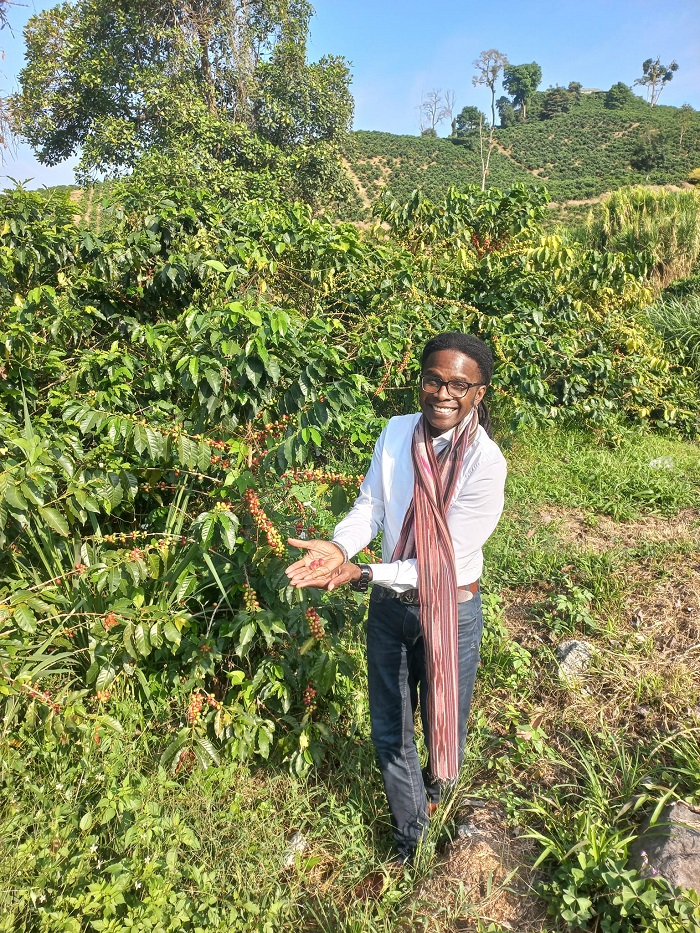
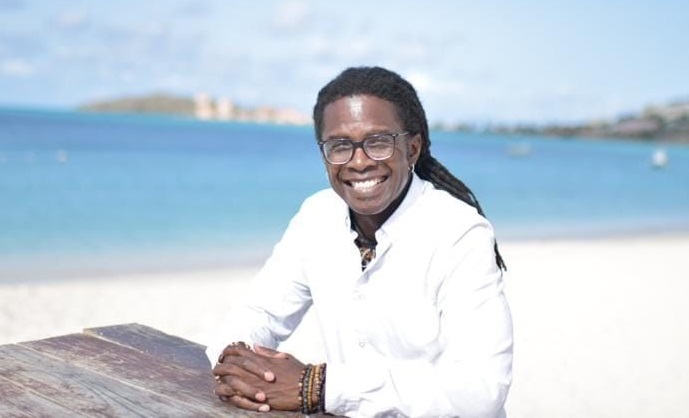
Francio Guadeloupe is a distinctive figure, driven by an insatiable curiosity and a profound reverence for humanity and the natural world. With a multifaceted identity encompassing roles as a researcher, musician, author, and anthropologist, Guadeloupe’s contributions resonate across cultural, scientific, and educational spheres.
Raised with the guiding principle that “no one is better than you, and you are not better than anyone else,” Guadeloupe embodies humility and egalitarianism in his approach to life and scholarship. Rooted in the wisdom imparted by his parents and grandmother, he recognizes the inherent worth and dignity of every individual, fostering an inclusive worldview that transcends boundaries of nationality, ethnicity, and creed. His ethos of nurturing and developing one’s gifts resonates deeply, inspiring others to embrace their talents and contribute positively to the world around them, is also something he learned from his grandmother.
Guadeloupe’s intellectual pursuits traverse diverse terrain, reflecting an appetite for knowledge and a commitment to understanding the intricacies of human existence. From delving into the complexities of diversity and multi-ethnicity to exploring the profound implications of climate change, his research serves as a beacon of insight and enlightenment in an ever-changing world.
As a musician and music enthusiast, Guadeloupe finds solace and inspiration in the universal language of melody and rhythm. Through his writing, he amplifies marginalized voices and challenges prevailing narratives, advocating for social justice and equity with eloquence and empathy.
Central to Guadeloupe’s influence is his unwavering commitment to fostering meaningful connections — between individuals, communities, and the natural world. His profound respect for the environment underscores a deep-seated belief in the interconnectedness of all living beings, urging us to tread lightly upon the earth and embrace our collective responsibility as stewards of the planet.
In a world often characterized by division and discord, Francio Guadeloupe stands as a shining example of compassion, integrity, and intellectual curiosity. His journey serves as an inspiration to all who seek to bridge divides, cultivate empathy, and forge a more harmonious and equitable future for generations to come. Look at the list of the Influencers we have interviewed or reported on, up to now.
The goal of the core group of Share2Uplift for 2024
The goal of the Share2Uplift movement is to: “Identify 250 leaders from all walks of life to connect, align and create impactful changes in all walks of life, which includes intergenerational collaboration by the end of 2024.” We will use interviewing Influencers, meet-and-greet events, “train-the-trainers”-programs on “Emotional Mastery” and “Intentionality “as national intervention strategies, to reach this goal on top of our goal to scale up the possibilities to connect, align and create impact via a virtual platform. We believe that by collaborating with Miguel Goede on the virtual Vision 2030 platform, we will accelerate the possibilities to connect the diaspora and others elsewhere in the world and on the island willing to constructively create impactful changes in Curaçao, to join.
As Share2Uplift, we are fully trying to align with this thinking of Center for Curriculum Redesign to promote this agenda in our educational systems and workplace. So, in that sense, we fully support any initiative to make our educational system 21st-century proof.
Share2Uplift aligners are those that: – Create an inspiring vision of the future; – Motivate and inspire people to engage with that vision; – Manage the delivery of the vision; – Coach and build a team, so that it is more effective at achieving the vision. These criteria are now being polished.
We also consider these 5 values the most important ones for Share2Uplift aligners. They are:
As we will progress towards this goal, we will update you on the progress.
Personal Coaching tips
Finally, we share some short videos of Michael Jackson, Cadomblé, Sinéad O’Connor, C.L.R. James, Bob Marley.
Michael Jackson, Olodum – They Don’t Care About Us (Clipe Legendado) (Tradução)
Candomblé In Brazil – YouTube
Sinéad O’Connor – Thank You For Hearing Me (Official Music Video)
Every Cook Can Govern: The life, works & impact of C.L.R. James Trailer – YouTube
Bob Marley – Is This Love – YouTube
C.L.R. James & Opposition to World War 2 – YouTube
Share this page
Become a Share2Uplift member
By becoming a member of Share2Uplift we will keep you informed about our activities, upcoming leadership projects and the launch of our online community. Membership is free.